BaZi Day Master basi
First Things First: What Is a Day Master?
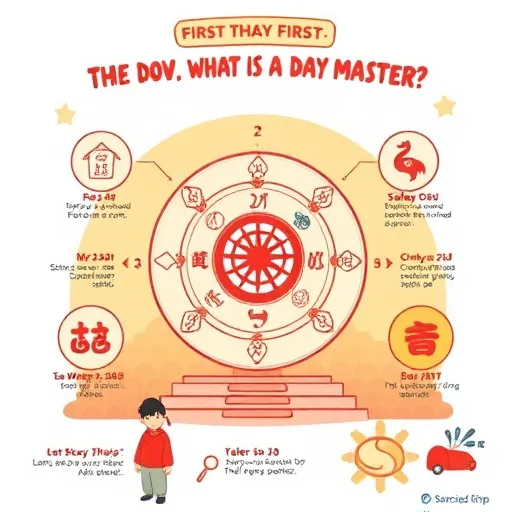
Before we can unpack what does a weak day master mean in bazi, you've gotta know what a Day Master actually is. Every BaZi chart — also called the Four Pillars of Destiny — is built from four pillars: year pillar, month pillar, day pillar, and hour pillar. Each one pairs a Heavenly Stem with an Earthly Branch. The Day Master is simply the Heavenly Stem sitting on top of the Day Pillar. That's it. But don't let the simplicity fool you — this single character represents you: your core self, your essential nature, and the lens you see the world through.
There are ten possible Day Masters, one for each of the five elements in either yin or yang polarity — Yang Wood, Yin Fire, Yang Metal, and so on. Every other piece of your BaZi chart gets measured against this one reference point. Think of the Day Master as the main character in your chart's story, with every other element playing a supporting or challenging role. Understanding what does a weak day master mean in bazi starts right here, because the whole concept of weak versus strong only makes sense relative to this central anchor.
What Makes a Day Master "Weak" in a BaZi Chart, and How Do the Five Elements and Ten Gods Factor In?
Here's where it gets technical — but stick with me, because it's way more intuitive than it sounds. A weak Day Master (sometimes called a weak self or unrooted self) shows up when the element representing you gets less support than drain or opposition inside the chart. Practitioners weigh several factors when figuring out what does a weak day master mean in bazi for any given person:
1. Seasonal Strength, the Month Branch, and the Five Elements Cycle
The month branch is the single most influential factor in classical BaZi analysis. If your Day Master element sits in its peak season — say, a Wood Day Master born in spring — it's considered strong. If it's born in a season that controls or exhausts it — like a Wood Day Master born in autumn, when Metal dominates — it leans weak. This seasonal lens is step one in decoding what does a weak day master mean in bazi.
2. Rooting in the Earthly Branches and Hidden Stems
Does your Day Master have roots? That means hidden stems tucked inside the Earthly Branches that share its element. A chart with zero rooting is often called floating — the Day Master has no anchor in the chart's foundation. When people ask what does a weak day master mean in bazi, a rootless chart is one of the clearest answers you'll find.
3. Resource and Companion Support Through the Ten Gods System
In the Ten Gods system, two categories prop up the Day Master: Resource (the element that produces yours) and Companion (the same element as yours). Plenty of well-placed Resource and Companion means the Day Master gains strength. Scarce or clashed support makes weakness more likely — another key piece of the puzzle around what does a weak day master mean in bazi.
4. Drain and Control From Output, Wealth, and Officer Elements
On the flip side, Output elements drain the Day Master, Wealth elements consume it, and Officer elements control it. A chart heavy in these categories — without adequate support — points straight toward a weak Day Master. One important nuance: weakness is relative, not absolute. Charts aren't graded on some universal scale. It's all about the internal balance of your specific pillars. Two people can both have weak Day Masters but need totally different remedies because their BaZi charts are structured differently.
Why the Term "Weak" Is Misleading When You Ask What Does a Weak Day Master Mean in BaZi
Let's address the elephant in the room. In everyday English, "weak" sounds negative. In BaZi, it's closer to yielding or receptive. A weak Day Master simply means your chart favors replenishment over expenditure. You thrive with backup, resources, and allies — and you struggle when you're overextended, isolated, or constantly outputting energy without refueling. Many highly successful people have weak Day Masters. This configuration often correlates with sensitivity, adaptability, empathy, and strategic thinking — qualities that are gold in the right context. Some of the most gifted creatives, counselors, and long-term planners operate from this kind of BaZi chart. The key is structuring your life so the chart works for you.
Personality Tendencies and Core Self Traits of a Weak Day Master
While every BaZi chart is unique, certain patterns keep showing up. People with a weak Day Master often display:
- High receptivity: They absorb information, moods, and environmental cues fast — sometimes too fast.
- Collaborative instincts: They do better in teams, partnerships, and mentored environments than in total isolation.
- Sensitivity to pressure: Heavy workloads, conflict, and high-stakes demands deplete them faster than they'd like.
- Adaptability: They bend rather than break — a real strength in volatile situations.
- Delayed confidence: Many report feeling more capable and grounded as they accumulate resources, skills, and supportive relationships over time.
None of these are defects. They're operating instructions. A plant that needs shade isn't "worse" than one that needs full sun — it just needs the right conditions. This reframe is central to understanding what does a weak day master mean in bazi without the fear-based baggage.
What Does a Weak Day Master Mean in BaZi for Career, Wealth, and Professional Timing?
In practical BaZi consultation, career and wealth questions are where the weak-versus-strong distinction earns its keep. Here's the general guidance:
Favor Collaboration, Partnerships, and Mentorship Over Solo Ventures
Because Companion and Resource elements strengthen a weak Day Master, partnerships, mentorships, and institutional backing tend to serve these individuals well. Going fully solo early on — no team, no mentor, no safety net — often leads to burnout. Building a strong support structure first is the smarter play.
Choose Work Environments That Replenish Your Resource Elements
Roles that constantly demand output — high-pressure sales floors, crisis management, perpetual client-facing work — can drain a weak Day Master. Environments that reward learning, research, craftsmanship, or supporting roles tend to be more sustainable. That said, once support is in place, many weak Day Masters excel in demanding fields precisely because of their adaptability.
Wealth Grows Through Structure, and Structure Requires Resource
In the Ten Gods framework, Wealth drains the Day Master. A weak Day Master chasing Wealth without support is like a small business expanding faster than its cash flow can handle. The counterintuitive advice: build Resource first — skills, knowledge, networks, credentials — and let Wealth follow. Slow compounding beats explosive overreach.
Luck Pillars and Favorable Timing Shift What a Weak Day Master Can Handle
Favorable luck pillars — periods when supportive elements arrive through the annual or decade cycles — can dramatically shift what a weak Day Master can handle. Practitioners often advise clients to time major launches, career moves, and investments to these supportive windows rather than fighting through unfavorable periods. This timing element is a huge part of what does a weak day master mean in bazi in real-life practice.
How Weak Day Masters Find Balance Through Resource, Companion, and Elemental Remedies
BaZi isn't just diagnostic; it's prescriptive. Once you know your Day Master is weak, several balancing strategies come into play:
- Strengthen Resource: Literal learning — courses, certifications, deep reading. Also rest, recovery, and self-care. Resource is the fuel that feeds the self.
- Build Companionship: Surround yourself with capable peers and collaborators. Community isn't a luxury for this chart type; it's infrastructure.
- Manage Output: Be deliberate about how much you give away — time, energy, creativity. Output without replenishment is the classic weak Day Master trap.
- Use elemental correspondences thoughtfully: Depending on your specific chart, practitioners may suggest adjustments in environment, color, direction, or daily habits that symbolically reinforce your supportive elements.
- Respect your rhythms: If you crash after intense social or professional sprints, that's data, not dysfunction. Schedule recovery like you'd schedule meetings.
Common Misconceptions About What Does a Weak Day Master Mean in BaZi
Let's clear up a few myths that circulate widely in online BaZi communities:
Myth: A Weak Day Master Means a Weak Person With a Weak Core Self
Untrue. The term describes elemental balance, not character. Sensitivity and adaptability aren't weaknesses; they're different strengths. Many resilient, accomplished individuals carry this configuration.
Myth: Weak BaZi Charts Can't Be Successful or Generate Wealth
Completely false. Chart structure, luck periods, and life choices matter enormously. A weak Day Master with strong Resource and well-timed supportive cycles can outperform a "strong" chart navigating unfavorable periods. Success is contextual.
Myth: You Should Always Strengthen a Weak Day Master
Not necessarily. Classical analysis also recognizes patterns where a chart is so overwhelmingly dominated by one element that a weak Day Master should actually yield to the dominant force rather than resist it. This is where experienced judgment matters — a single rule applied blindly can mislead. The analysis has to look at the whole BaZi chart, not just one factor.
So, what does a weak day master mean in bazi? In short: your chart's central self benefits from support, resources, and allies, and needs to be careful about overextending. It's a configuration that rewards collaboration, strategic pacing, and continuous learning — and it frequently correlates with genuine sensitivity and adaptability. If you've recently discovered your Day Master is weak, the most useful next step is identifying your Resource and Companion elements specifically, then checking how abundant and well-placed they are in your chart. From there, you can start making choices that feed the self rather than drain it. The chart isn't a cage; it's a weather report — and with the right preparation, even a chart that runs on the delicate side can flourish for decades.