Bazi four pillars ei
What Are the Bazi Pillars, Exactly?
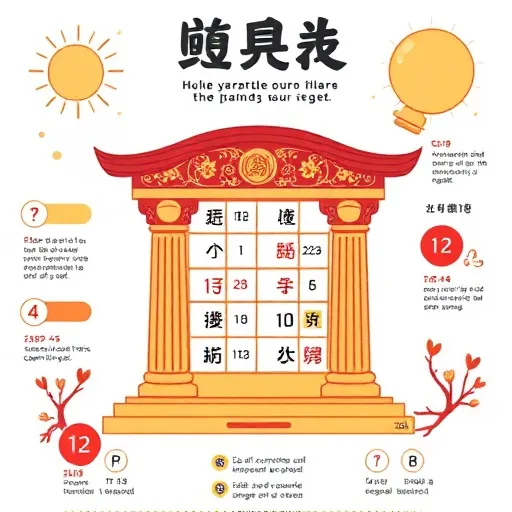
Let's kick things off with the fundamentals. The term "Bazi" translates literally to "eight characters," and those eight characters are derived from four pillars. Every single pillar is composed of one Heavenly Stem paired with one Earthly Branch — that's two characters per pillar, four pillars in total, which gives you your eight characters. If you're wondering how to calculate your bazi pillars by hand, this section breaks down exactly what each pillar represents before we dive into the math.
The four pillars and what they signify:
- Year Pillar — represents your ancestry, family background, and early childhood years
- Month Pillar — connected to your parents, career path, and social environment
- Day Pillar — the most critical one; represents your core self and your spouse
- Hour Pillar — reflects your children, later life, and inner aspirations
Each pillar encodes detailed information about the Five Elements — Wood, Fire, Earth, Metal, and Water — and the balance (or lack thereof) among these elements in your birth chart is what a practitioner carefully analyzes. But before any interpretation can happen, you first need to construct the chart itself. Learning how to calculate your bazi pillars by hand is the foundation for everything that follows, so let's walk through it step by step.
The Essential Tools and Reference Materials You'll Need for Hand Calculation
Before jumping into the calculations, gather these items:
- Your exact birth date (day, month, year)
- Your exact birth time (as precise as you can get it)
- Your birth location (to account for time zone and true solar time)
- A Ten Thousand Year Calendar (or an accurate solar term conversion table)
- A pen and paper — trust me, you'll want to write this out
One crucial note: traditional Bazi uses the solar calendar, not the lunar calendar, for most calculations. This trips up a ton of beginners. The Chinese solar year typically begins around February 4th (the start of spring in the traditional solar term system), not January 1st. So if you were born in January or early February, you need to double-check which year your birth actually falls under in the solar calendar. Getting this wrong from the start will throw off everything — and it's the number one reason people struggle with how to calculate your bazi pillars by hand correctly.
Step 1: Finding Your Year Pillar Through the Sexagenary Cycle and Heavenly Stems
The Year Pillar is the easiest of the four, making it a natural starting point. Each year in the sexagenary cycle corresponds to a specific Heavenly Stem and Earthly Branch combination.
Here's the shortcut: Take the last two digits of your birth year. For example, if you were born in 1990, use 90.
- For the Heavenly Stem: subtract 3 from the last two digits, then find the remainder when divided by 10.
- For the Earthly Branch: subtract 3 from the last two digits, then find the remainder when divided by 12.
So for 1990: 90 − 3 = 87. 87 mod 10 = 7, which corresponds to the 7th Heavenly Stem. 87 mod 12 = 3, which corresponds to the 3rd Earthly Branch. So 1990 would be a Geng-Yin year.
Now, the important caveat: if you were born before the start of spring (around February 4th), you belong to the previous year's pillar. This is where the solar term calendar becomes essential. Many beginners get this wrong, and it throws off the entire birth chart. When learning how to calculate your bazi pillars by hand, this pre-spring cutoff is the detail that separates accurate charts from messy ones.
Step 2: Determining Your Month Pillar Using Solar Terms and the Five Tigers Rule
The Month Pillar is where things get slightly trickier. The Month Pillar isn't based on the Western calendar month — it's based on the 12 solar terms (known as jieqi) that divide the year into agricultural months. Each solar month begins when the sun reaches a specific longitude.
The first solar month begins at Lichun (around February 4th), and each subsequent month starts roughly every 30 days. You'll need your Ten Thousand Year Calendar to pinpoint which solar month your birth date falls into.
Once you've identified your solar month, you can determine the Heavenly Stem using a fixed rule based on your Year Stem. This is where the Five Tigers rule comes in — a mnemonic that practitioners have used for generations to quickly derive the month stem without a computer. For instance, if your year stem is Jia or Ji, the first month of that year starts with the Bing stem. Understanding this rule is a key part of how to calculate your bazi pillars by hand efficiently.
This part definitely takes practice. My advice? Look up the Five Tigers rule table and keep it handy. After a few charts, you'll start to memorize the patterns.
Step 3: Calculating Your Day Pillar with Julian Day Numbers and Modular Arithmetic
Here's where the real work begins. The Day Pillar is considered the most important pillar in your entire birth chart — it represents your core self and your Day Master. But calculating it by hand is the most labor-intensive part of the whole process.
There are a few methods, but the most reliable one uses a Julian Day Number approach combined with a known reference date. The basic idea is:
- Convert your birth date to a Julian Day Number
- Find the difference between your date and a known reference date with a known stem-branch combination
- Apply modular arithmetic to derive the stem (mod 10) and branch (mod 12)
Alternatively, many practitioners use a base formula where you calculate the number of days elapsed since a fixed reference point, then divide by 60 (since the sexagenary cycle repeats every 60 days). The remainder tells you exactly where you land in the cycle.
I won't lie — this is tedious. But it's also weirdly satisfying when you get the number to line up perfectly. If you're serious about learning how to calculate your bazi pillars by hand, this is the step to practice the most. The good news is that once you've done it a few times, the arithmetic becomes second nature.
Step 4: Figuring Out Your Hour Pillar with the Five Rats Rule and True Solar Time
The Hour Pillar is the last piece of the puzzle. In the traditional system, each day is divided into 12 two-hour segments, each governed by an Earthly Branch. For example:
- 23:00 – 01:00 → Zi hour
- 01:00 – 03:00 → Chou hour
- 03:00 – 05:00 → Yin hour
- ...and so on through the full 12-branch cycle
Once you know your birth hour's branch, the Heavenly Stem of the Hour Pillar is derived from the Day Stem using a fixed rule — often called the Five Rats rule. It works similarly to the Five Tigers rule for months: depending on what your Day Stem is, the first hour of that day starts with a specific stem, and the rest follow in sequence.
A quick word on true solar time: if you were born far from the longitude that defines your time zone, or during daylight saving time, you'll need to adjust your birth time accordingly. This is a step many people skip, but it can shift your Hour Pillar entirely if you were born near a boundary. In 2026, with time zones and daylight saving changes varying across regions, it's more important than ever to double-check. Mastering how to calculate your bazi pillars by hand means paying attention to these subtle adjustments.
Putting It All Together: Assembling Your Eight Characters and Five Elements Distribution
Once you've worked through all four steps, you'll have your complete birth chart — four stems and four branches, arranged as:
- Year Stem + Year Branch
- Month Stem + Month Branch
- Day Stem + Day Branch
- Hour Stem + Hour Branch
That's your eight characters. From there, you can begin analyzing the Five Elements distribution, identify your Day Master (the Day Stem), and explore how the Ten Gods and hidden stems interact within your chart. Knowing how to calculate your bazi pillars by hand gives you a deeper appreciation for how all these layers connect.
Common Mistakes to Avoid When You Calculate Your Bazi Pillars by Hand
From my experience working with charts and teaching beginners, here are the most frequent pitfalls:
- Using lunar dates instead of solar dates — the Year Pillar and Month Pillar rely on solar terms, not lunar months.
- Ignoring the pre-spring cutoff — anyone born in January or early February needs extra scrutiny with the solar term calendar.
- Skipping the time zone adjustment — true solar time matters, especially for the Hour Pillar.
- Rushing the Day Pillar calculation — a single arithmetic slip throws off everything downstream.
- Forgetting to double-check with a reference table — even seasoned practitioners verify their results against a Ten Thousand Year Calendar.
Why Learning How to Calculate Your Bazi Pillars by Hand Still Matters in 2026
In an era where apps can generate your entire birth chart in seconds, why bother learning the manual method? Here's my take: understanding the calculation process gives you a much deeper appreciation for the system's internal logic. You start to see why certain pillars interact the way they do, rather than just accepting the output of a black box. When you know how to calculate your bazi pillars by hand, you're not just reading a chart — you're understanding the sexagenary cycle, the solar terms, and the Five Elements on a whole new level.
Plus, there's a certain meditative quality to working through the numbers by hand. Many practitioners describe it as a way of connecting with the tradition — a practice that dates back centuries and has been refined by countless industry professionals and seasoned practitioners over generations. Whether you're a curious beginner or a serious student of Chinese metaphysics, learning how to calculate your bazi pillars by hand is an investment in your foundational understanding of the Heavenly Stems, Earthly Branches, and Five Elements framework.